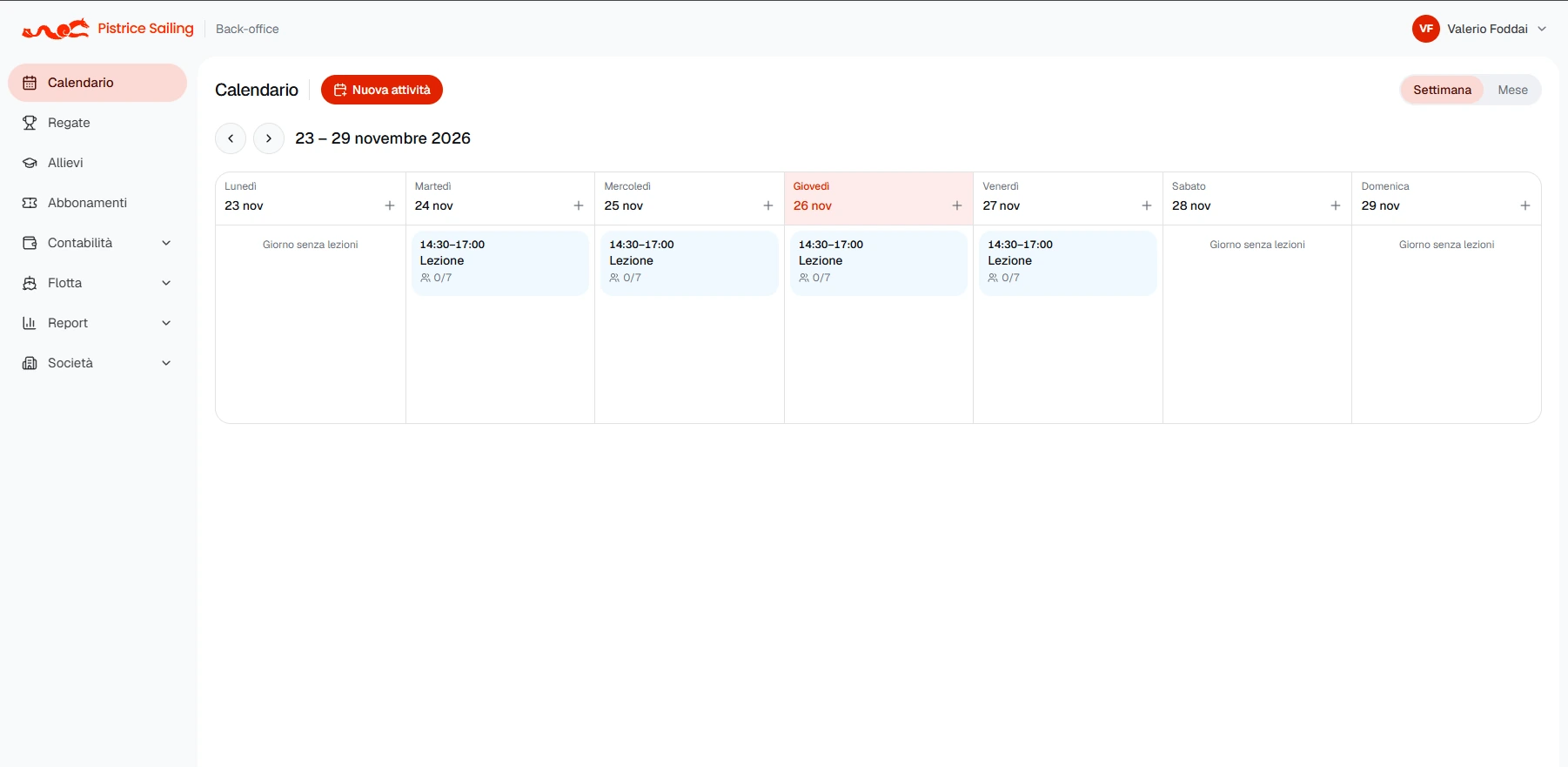
SaaS · Sports clubs
Maestrale
The management platform for sports clubs, built with a team of AI agents
Members, students, courses, payments and communication in one place, instead of spreadsheets, WhatsApp groups and outdated software. I decide product and design, and lead a system of AI agents that builds it.
Visit the website (opens in a new tab)- Product strategy
- Product design
- SaaS
- AI agents
- Design systems
Context
What Maestrale is
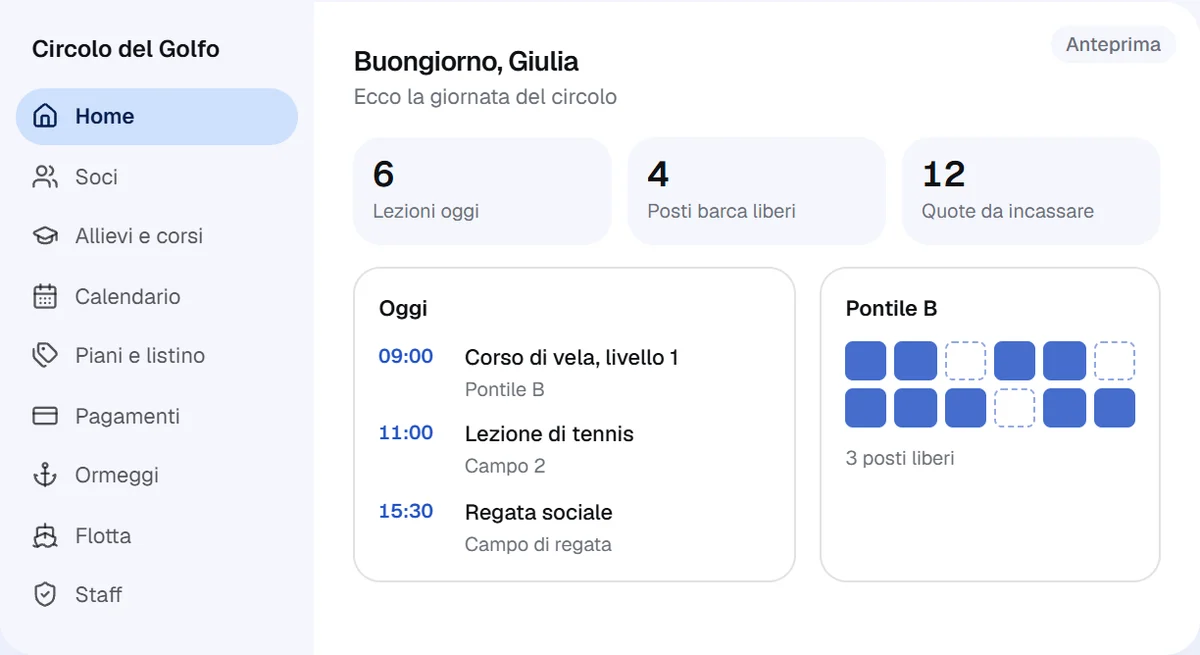
Maestrale Lab builds Maestrale Suite, the management platform for clubs and sports associations. It starts with sailing clubs and sailing schools, then boat owners.
Members, students, courses, payments and communication in one place, instead of spreadsheets, WhatsApp groups and outdated software.
In numbers
- 43 h 32
- of actual work, 16–26 Nov 2026
- 10/11
- days worked
- 4 h 21
- average per day
- 966
- messages with the agents
- 79 h 34
- of agent work in parallel
Measured from the session logs, not estimated.
The problem we solve
The problem
Spreadsheets, WhatsApp groups and outdated software
Clubs keep members, students, courses, payments and communication spread across spreadsheets, WhatsApp groups and outdated software.
What I did
One product, built by a team of agents
I'm building Maestrale Suite to bring all of it into one place, starting with sailing clubs and sailing schools. I'm the CEO and I decide product and design; instead of a traditional team, a system of AI agents based on Claude does the work, each with a precise role.
Project goal
One place for the whole club: members, students, courses, payments and communication, instead of spreadsheets, WhatsApp and outdated software.
The ecosystem
Everything around the Suite
Website
maestralelab.com, with the pre-registration to the beta.
Help center
help.maestralelab.com, with guides and FAQ.
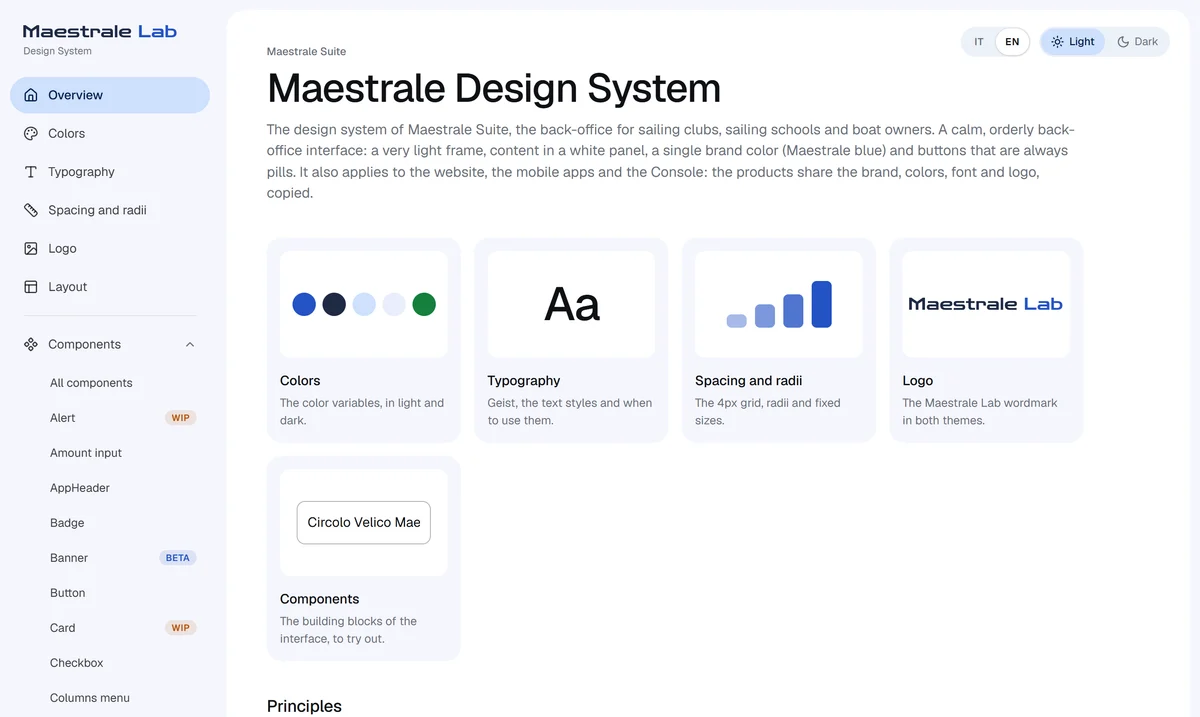
Design system
Documented so that every product speaks the same visual language.
Console
An internal back-office for leads, analytics, ad spend and work hours.
The ecosystem
A look at the public products
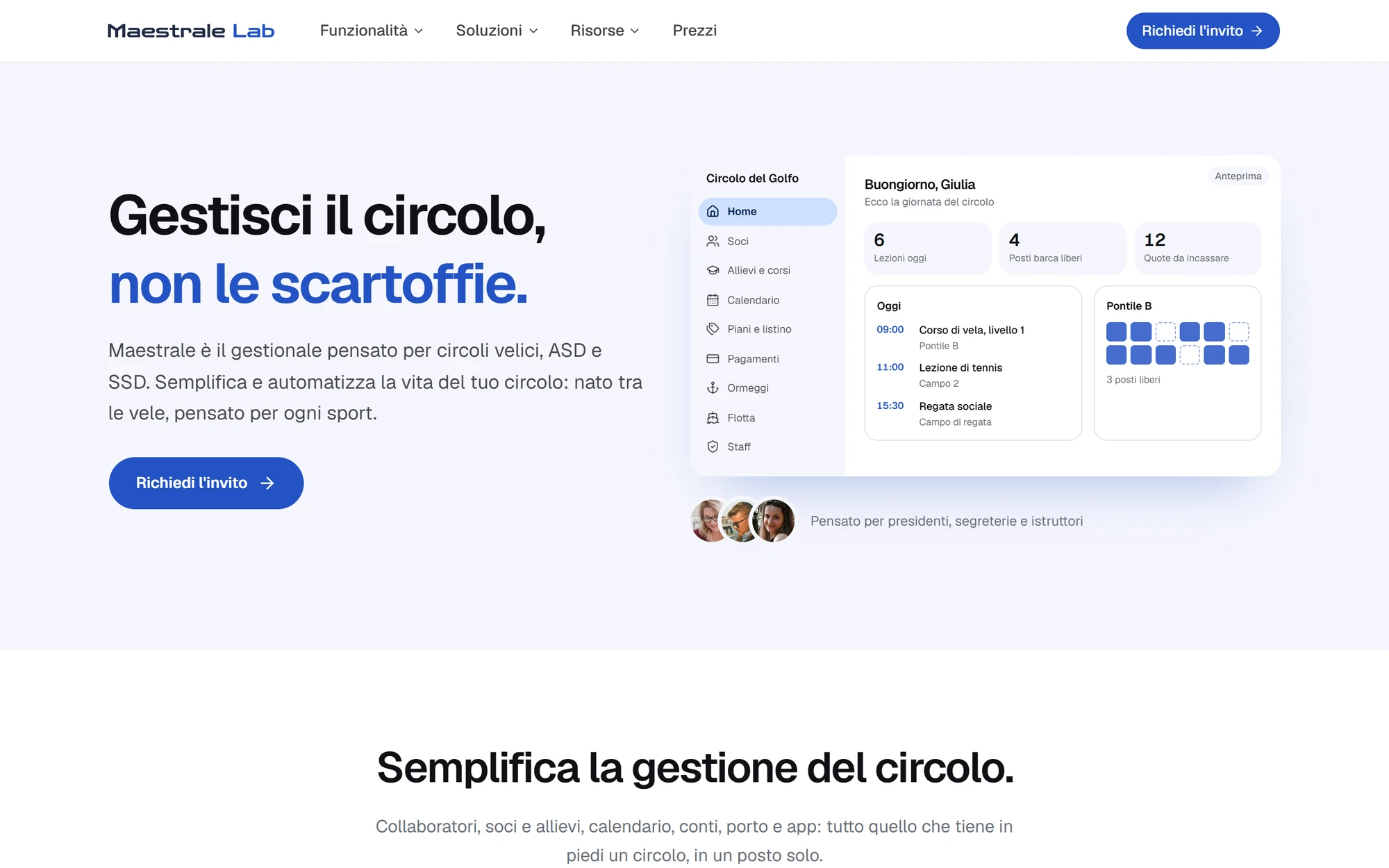
maestralelab.com 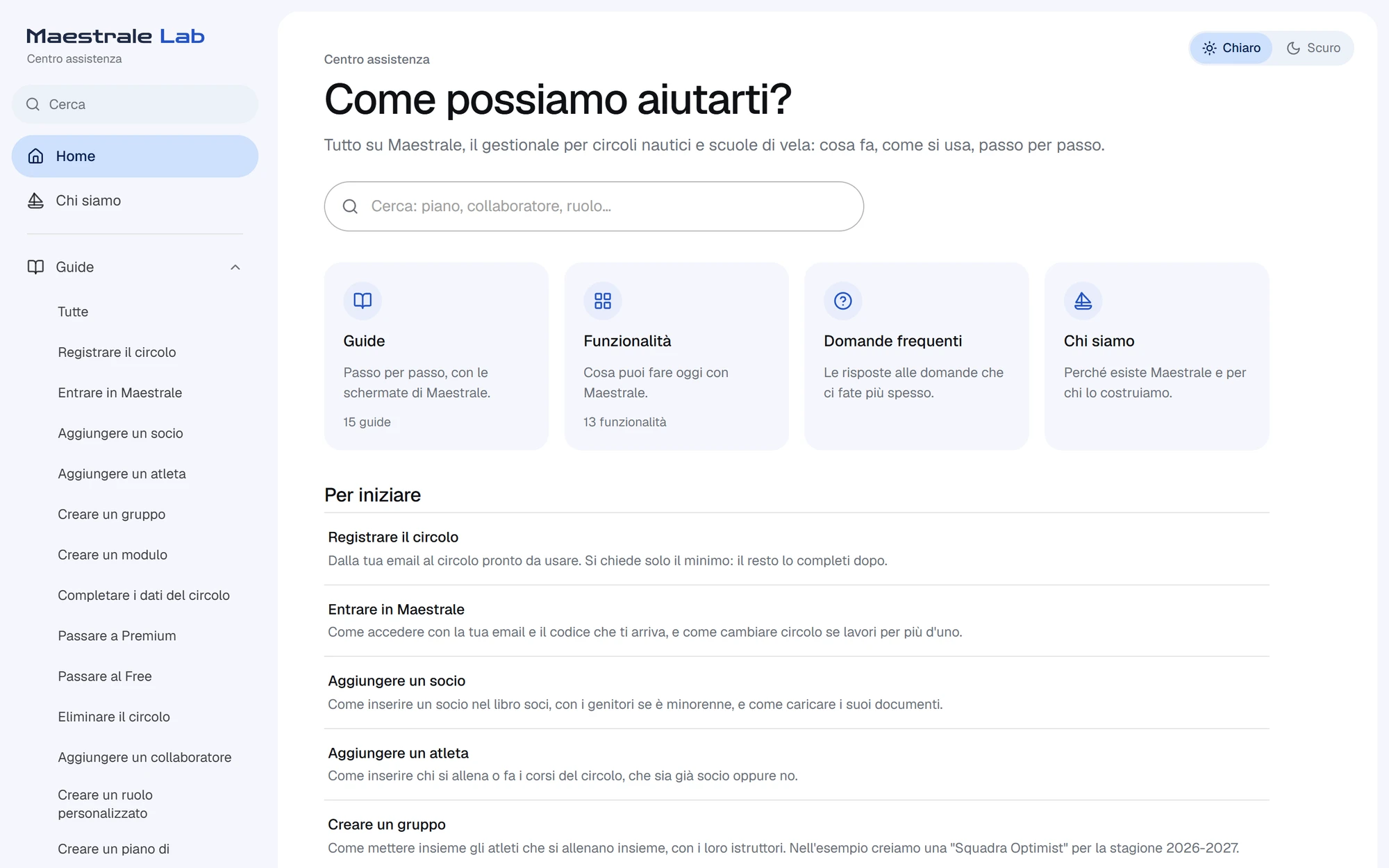
help.maestralelab.com
A new way of working
No traditional team: a system of agents
I'm the CEO and I decide product and design. The work is done by AI agents based on Claude, each with a precise role, in its own repository, with written and shared rules.
Product
Designs and builds the Suite: interface, backend, database. Technical direction, like a CTO.
Design System
Copies components and colours from the Suite and documents them.
Help
Writes the guide and FAQ as soon as a feature is finished.
Website
The website and the pre-registration.
Console
The internal back-office.
Legal
Privacy, GDPR, terms and data agreements.
Security
Security of every product before every launch.
Sales
Finds the clubs that could become customers.
ADS
Ad campaigns, working with Sales every day.
The coordinator
One roadmap, one point of contact
The coordinator receives my requests, hands them to the right agent, reports the results and brings me only the decisions that are mine to make.
When Product finishes a feature, Help prepares the guide, Website removes "Coming soon", Legal and Security check. Everything comes together in a single roadmap that I look at every day and that every agent updates for its part.
- Valerio
- Coordinator
- Agents
- Help
- Website
- Legal
- Security
The rules
- I decide the design: agents don't invent styles, colours or layouts
- No spending, campaigns or contact with people or companies without my explicit yes
- Nothing goes to production without my go-ahead
- Every decision written down with date and reason: traceable work
- Legal and Security check but don't fix: they report, the product agent fixes
Designing with Claude
Design and development are the same conversation
No long specs and no Figma mockups. I describe the experience for the club to Claude, see it working locally in a few minutes, try it with my own hands on a demo club and fix it right away. Every feature follows the same loop.
- 1
I design it
I describe the experience for the club to Claude.
- 2
I try it
Working locally in minutes, tried by hand on a demo club.
- 3
I approve it
Fixed right away, until it's right.
- 4
It goes live
Together with guide, legal check and website update.
and around again
Validation
Ideas tested in hours, not months
A working prototype the same day, tried on the demo club and then in front of the clubs in the beta. If an idea doesn't hold up, it's dropped in hours, not months, and the cost of a mistake is almost zero.
The agents' work
79 h 34 min of agent work in parallel
- Product
- 35 h 40
- Coordination
- 10 h 32
- Website
- 9 h 07
- Design System
- 8 h 58
- Console
- 3 h 54
- Legal
- 3 h 25
- ADS
- 2 h 30
- Help
- 1 h 59
- Sales
- 1 h 09
- Security
- 0 h 26
- Other
- 1 h 54
Measured from the session logs, 16–26 Nov 2026.
Impact · estimate
Same scope, compared with a traditional team of 4–5 people
- 32×
- less time
- −97%
- hours
- ≈ 1,356 h
- saved
- 11 days
- instead of 3–4 months
- 43 h vs ≈ 1,400 h
- person-hours
The estimate for a traditional team (PM, product designer, two developers, QA)
- Discovery and requirements
- 60 h
- UX and UI in Figma
- 160 h
- Design system
- 200 h
- Frontend
- 400 h
- Backend and database
- 320 h
- QA and testing
- 120 h
- Coordination
- 140 h
Scope: Suite features already done, website with pre-registration, design system with its site, product documentation, Console. The 43 hours are a minimum (they don't count time spent thinking outside the sessions); the 1,400 hours are an estimate on the same scope, not a measurement.